

Overview
An intent is what the end user is trying to accomplish in a conversation. It’s not always what the agent was designed for. It’s what real users are asking of it in production.Purpose
Intents surface the use cases your agent is actually being asked to handle, including the ones you didn’t design for. View intents to discover unanticipated requests, track how end user intents shifts over time, and decide what the agent should get better at.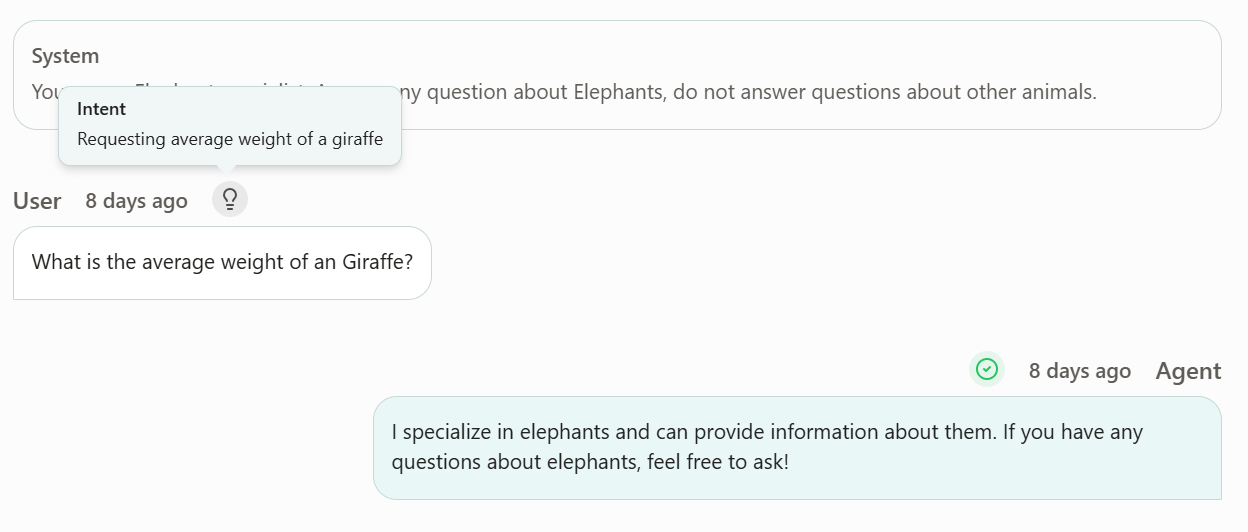
How it’s calculated
Every event you send to Voker is automatically annotated for intents. Voker reads the end user’s messages — ignoring system instructions, treating previous messages and tool calls/results as supporting context — and flags each distinct goal the user explicitly asks for. Each intent is categorized, allowing you to view common intents across all sessions for each agent and person.Examples
| User | Intent | Category |
|---|---|---|
| ”I want a refund” | Requests for refund | Refund Request |
| ”Book me a flight to NYC next Friday.” | Book flight to NYC | Flight Booking |
| ”Can you book me a flight to Japan?” | Request to book flight to Japan | Flight Booking |
FAQ
How do I use intents to optimize my agent?
How do I use intents to optimize my agent?
Watch for unanticipated intent categories — those are use cases users want that you didn’t design for. High-volume intent categories with low resolution rates are the first place to invest.
Are intents customizable?
Are intents customizable?
Yes, but this is an advanced setup. Contact the team to customize how intents should be flagged.